· Andrew Le Breuilly · 5 min read · Rethinking Survey Data — Part 7
From Survey Project to Reusable Data Asset
A modern survey data workflow connects source data, applies governed transformations and delivers structured outputs that remain useful after the project ends.
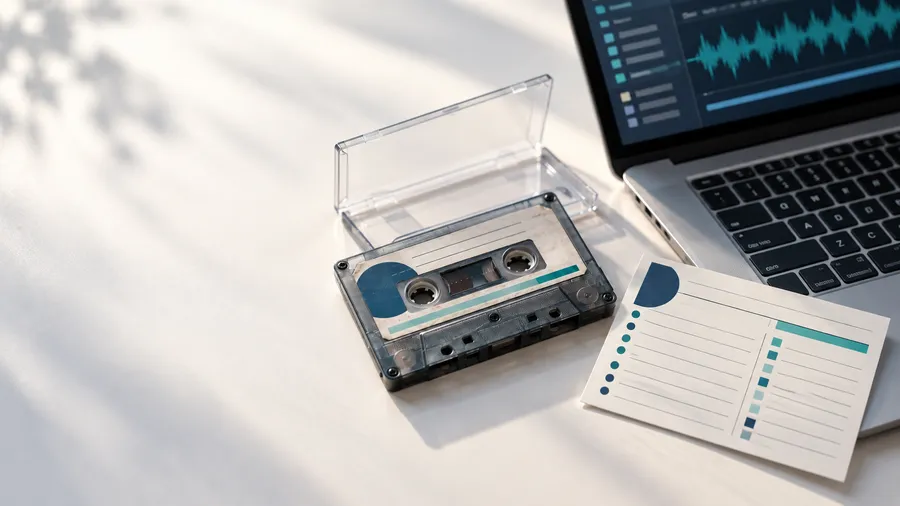
Most survey workflows are designed to reach the next deliverable.
We collect the responses, export the data, process it and produce the tables, dashboard or presentation. Once the findings have been delivered, the project files are archived and everybody moves on.
There is nothing inherently wrong with that process. It gets the immediate job done.
But it also means a large part of the value created during processing disappears into the archive. When the next wave arrives or somebody asks a new question, we often have to reconstruct what happened the first time.
What if the deliverable was not the end of the workflow? What if the project also left behind a governed data asset that could be queried, combined and reused?
Begin by preserving what arrived
The first responsibility is to retain the original survey data and metadata.
Whether the source arrives through an API or as an SPSS file, cleaning and restructuring should not overwrite the only authoritative copy. Keeping the original gives us somewhere reliable to return when processing logic changes or a result needs to be investigated.
It also allows us to separate source problems from processing problems. Was the value missing when it arrived, or did a transformation remove it? Did the label come from the collection platform, or was it changed later?
These questions become much easier to answer when the source is preserved deliberately.
Convert different sources into a consistent model
Survey platforms represent questions, options and responses in different ways. If those differences flow through the entire process, every dashboard and analytical tool needs source-specific logic.
A consistent survey data model provides a common destination.
Responses, respondent attributes, codebook metadata and source information can be held in linked structures. The study keeps its distinctive questionnaire and analytical meaning, but downstream tools receive a predictable interface.
This is what allows transformations and integrations to become reusable. A new connector needs to understand its source and map it into the model. Everything after that can work from the same conventions.
The earlier article on modelling survey data for modern analytics explores this structure in more detail.
Make transformation logic visible
Raw survey data rarely arrives ready for every analytical use.
We may need to clean labels, restructure multiple-response questions, handle loops, create analysis universes, build nets, apply weights and connect external classifications. Complex studies will also contain logic specific to the client or subject matter.
Those transformations should be managed parts of the pipeline rather than changes hidden in a collection of files.
Common operations can be packaged for reuse. Specialist logic can remain explicit and attached to the project that needs it. When the next wave arrives, the team can rerun the agreed process and concentrate on what has genuinely changed.
This is how we move from repeating survey processing to operating a repeatable survey pipeline.
Use layers to govern the journey
A Bronze, Silver and Gold structure provides clear boundaries:
- Bronze preserves the source
- Silver contains the governed transformations
- Gold provides approved, analysis-ready outputs
This makes it possible to trace a result back through the process. We can see what was delivered, how it was constructed and what originally arrived.
Governance is often treated as documentation added after the technical work. It is much more effective when it is built into the processing itself.
The article on Bronze, Silver and Gold for survey data explains how these layers support audit, recovery and automation.
Deliver data where people need it
There is no single correct destination for survey data.
A researcher may need an SPSS file. A reporting team may work in Tableau or Power BI. An enterprise data team may want Parquet tables in its own cloud storage or survey data integrated into a warehouse alongside CRM, sales and product information.
The pipeline should support these different outputs without requiring every consumer to rebuild the survey logic.
Platforms such as Tableau and Power BI can support significance testing, minimum base-size controls, weighted analysis and other sophisticated survey requirements when the appropriate data model and calculations sit underneath them.
This gives organisations more choice while preserving the analytical standards expected in research.
Reuse changes what the organisation retains
At the end of a file-based project, the organisation keeps the outputs.
At the end of a reusable pipeline, it can also retain:
- The original source and metadata
- A structured representation of the questionnaire
- Tested transformation logic
- Definitions for derived variables and analytical groups
- A record of changes between waves
- Approved data ready for multiple analytical tools
That foundation becomes more valuable over time. Future waves start with established processing. New dashboards can use the existing model. Questions that were not part of the original brief can be explored without first rebuilding the project.
The data becomes an asset rather than a by-product.
Where Purify Intelligence fits
Purify Intelligence is being built around this approach.
Purify Intelligence connects to survey sources, preserves raw inputs, converts projects into a consistent survey data model and applies transformations through governed, reusable pipelines. Finished data can then be delivered into the statistical, storage and analytical tools an organisation already uses.
We use deterministic transformations where processing should be predictable and repeatable. AI is introduced where interpretation is valuable, such as working with open text, and remains part of the same governed workflow.
The aim is not to replace research expertise or dictate which analytical tools people should use. It is to give that expertise a modern data foundation.
A better ending for survey projects
Survey data should not disappear when the presentation is delivered.
The original project may be complete, but the structured data, processing logic and analytical context can continue to support the next wave, the next question and the next generation of tools.
That is the shift at the heart of this series: from treating survey data as a disposable project file to treating it as a trusted, reusable data asset.
If you would like to explore what that could look like for one of your survey programmes, book a product walkthrough.